Procuring industrial packaging often leads to a common dilemma: balancing the immediate cost of a unit with the long-term risk of product loss during transit. For many in the agricultural and chemical sectors, the 50kg capacity remains the global standard for bulk powder and granular transport.
However, searching for the most competitive pp woven bags 50kg price often reveals a wide variance in quotes. This price volatility is rarely random; it is typically driven by the grade of polypropylene resin used, the fabric's GSM (grams per square meter), and the specific weaving technology employed to prevent bursting under heavy loads.
To optimize procurement, buyers must look beyond the surface price and analyze the technical architecture of the bag. By understanding how material purity and weave density impact the total cost of ownership, companies can reduce waste rates and prevent costly shipment failures.


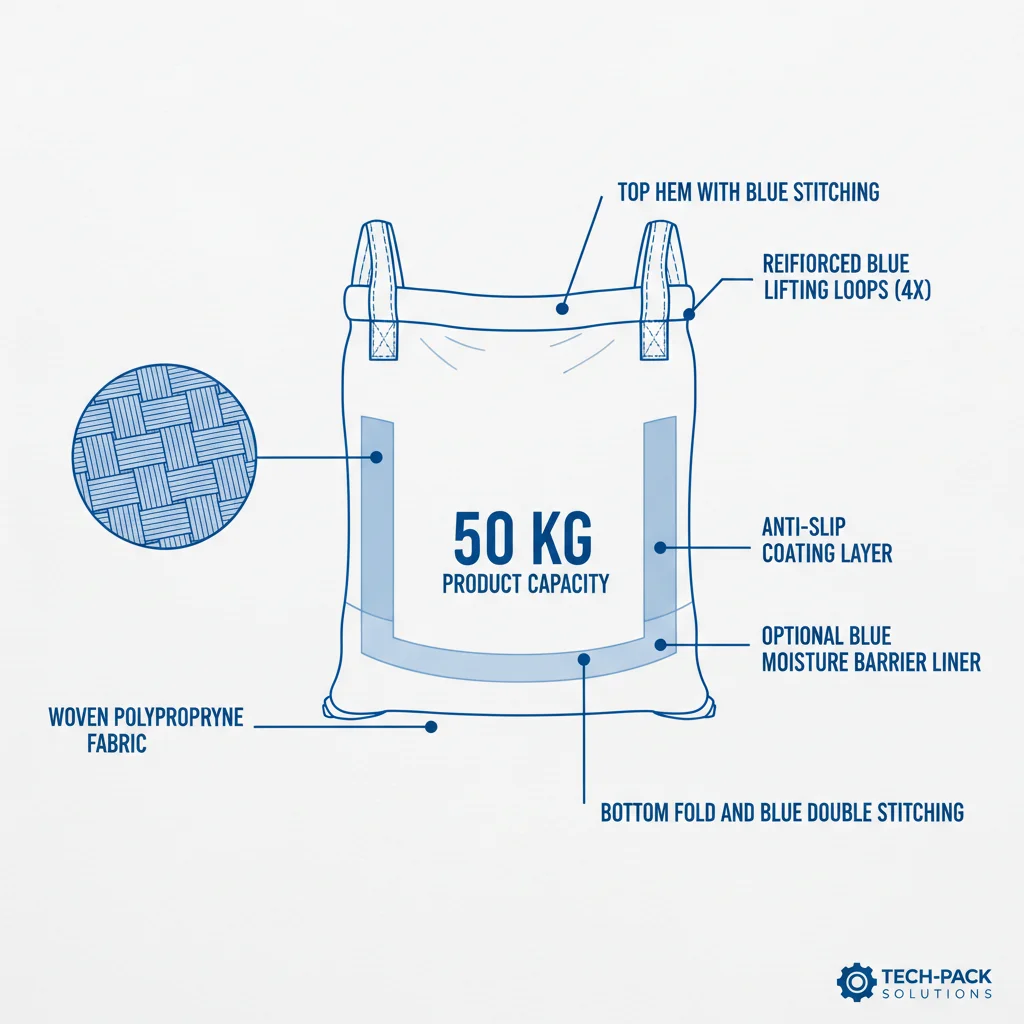
The core of a high-performance 50kg bag lies in the PP woven fabric. Unlike simple plastic films, woven polypropylene consists of extruded tapes interlaced at right angles. This creates a structural grid that distributes weight evenly across the surface, which is critical when a bag is stacked in a warehouse or dropped during unloading.
Advanced circular weaving technology is often utilized to eliminate side seams in certain bag types, significantly reducing the risk of longitudinal bursts. When the base material is engineered from 100% virgin polypropylene, the resulting fabric exhibits a level of purity and tensile strength that recycled alternatives cannot match, directly influencing the stability of the final package.
To ensure a bag can reliably hold 50kg, engineers focus on the Fabric Weight (GSM) and the Tensile Strength of the warp and weft tapes. A high-density weave not only prevents leakage of fine powders but also resists the "stretching" effect that occurs under heavy vertical pressure. If the GSM is too low, the bag may bulge excessively, leading to instability in palletized shipments.
Another critical factor is UV stabilization. Polypropylene naturally degrades when exposed to ultraviolet radiation. For products stored outdoors, the integration of UV inhibitors during the resin extrusion process is mandatory. Without this, the fabric becomes brittle, and its breaking strength drops precipitously, regardless of the initial weight capacity.
Finally, the choice between coated (laminated) and uncoated fabric dictates the moisture barrier. Laminated bags feature a PE coating that renders the material airtight and water-resistant, which is essential for hygroscopic chemicals or fine minerals that would otherwise clump or leak through a plain weave.
When evaluating the pp woven bags 50kg price, buyers often focus on the per-unit cost. However, a lower initial price frequently correlates with a higher failure rate. A bag that bursts during a 50kg load event doesn't just cost the price of the bag; it costs the lost product and the labor required for cleanup.
The true economy of industrial packaging is found in the 'failure-adjusted cost.' Using premium virgin PP fabric typically extends material life from 12-18 months to 24-36 months and reduces the waste rate from an industry average of 5-8% to under 2%.
By investing in higher-grade polymers and precision weaving, companies effectively lower their operational risk. This shift from a "lowest-price" strategy to a "lowest-risk" strategy ensures that the supply chain remains uninterrupted and the brand's reputation for quality is maintained.
Precision in fabric roll production directly impacts the conversion efficiency of bag manufacturing. Uniform weave density and precise roll widths ensure that minimal material is wasted during the cutting and sewing process. When the material is inconsistent, manufacturers must increase margins to avoid undersized bags, which inadvertently raises the total cost.
The following index illustrates the relative performance impact of premium versus standard PP fabrics across key operational metrics, demonstrating where the actual value is recovered during the production cycle.
The choice of bag type depends heavily on the material being transported. For agricultural grains, a breathable, uncoated PP woven bag is ideal as it allows moisture to escape, preventing mold. In contrast, fine chemicals and cement require BOPP laminated bags or valve bags to ensure a hermetic seal and prevent environmental contamination.
In a typical industrial setting, a manufacturer evaluating their 50kg packaging should consider the "filling-to-shipping" cycle. If the bags are filled via automated machinery, the precision of the bag dimensions becomes paramount to prevent jams in the filling line. This is where high-precision fabric rolls, such as those provided by Hebei Shengshi Jintang Packaging, ensure a seamless transition from raw fabric to a market-ready bag.
Sustainability is no longer an option but a regulatory requirement in global trade. Polypropylene is a thermoplastic polymer, meaning it can be melted and reformed. The industry is moving toward a circular economy where used PP woven bags are collected and repurposed into other plastic products, reducing the overall environmental footprint.
The challenge lies in maintaining the strength of the fabric when using recycled content. This is why a hybrid approach—using 100% virgin PP for the primary structural load-bearing components and recycled materials for secondary packaging—is becoming a prevalent strategy among forward-thinking manufacturers.
Future developments are focusing on bio-based polypropylene and enhanced recyclability markers. The goal is to create a 50kg bag that offers the same mechanical properties as traditional PP but with a significantly lower carbon footprint during the extrusion phase.
When comparing quotes for 50kg PP bags, the purchasing department should utilize a weighted evaluation matrix. Price is only one variable; the durability of the fabric, the UV rating, and the supplier's ability to maintain GSM consistency across batches are equally critical.
A common mistake is ignoring the "Breaking Strength" (Warp/Weft) in the technical datasheet. A bag might meet the 50kg weight requirement under static conditions but fail during the dynamic stress of shipping. Verifying the breaking strength ensures that the bag can handle the shocks of transport.
The following table provides a conceptual framework for comparing standard fabric bags against premium high-grade PP woven solutions.
| Evaluation Factor | Standard PP Fabric | Premium Virgin PP | Impact on Operation |
|---|---|---|---|
| Material Life | 12-18 Months | 24-36 Months | Lower Replacement Frequency |
| Waste Rate | 5% - 8% | < 2% | Higher Material Yield |
| Load Capacity | Medium/Standard | Extra High | Reduced Bag Failure Risk |
| UV Resistance | Basic / Low | Advanced / High | Extended Outdoor Storage |
| Purity Level | Mixed/Recycled | 100% Virgin | Chemical Stability |
| Conversion Speed | Standard | Optimized | Faster Production Line |
The price is primarily influenced by the cost of raw polypropylene resin, the fabric weight (GSM), and the complexity of the finish. For instance, bags using 100% virgin PP are more expensive than those with recycled content but offer superior strength. Additionally, BOPP lamination or specialized UV coatings add to the cost but are necessary for specific environmental conditions.
The choice depends on the product's sensitivity to moisture. Uncoated fabric is breathable, making it the standard for agricultural products like grains or seeds. Coated (laminated) fabric features a PE layer that makes it water-resistant and airtight, which is critical for fine chemical powders, resins, or minerals that must stay dry to maintain quality.
GSM (Grams per Square Meter) measures the density of the fabric. A higher GSM generally indicates a thicker, stronger fabric with better tear resistance. For 50kg loads, selecting the correct GSM is a balance between cost and safety; too low a GSM increases the risk of bursting, while excessively high GSM may increase costs without providing additional practical benefit.
Yes, when color is integrated during the extrusion process (masterbatching) rather than printed on the surface. This ensures the color is consistent throughout the entire structure of the PP tape, maintaining the original tensile strength and UV resistance of the material while allowing for brand identification.
UV resistance is achieved by mixing high-quality UV inhibitors directly into the polypropylene resin before the tapes are spun. These additives absorb or block harmful UV rays, preventing the polymer chains from breaking. This is essential for bags stored in open yards or transported in uncovered trucks under intense sunlight.
Yes, polypropylene is a thermoplastic, which means it can be melted and repurposed multiple times. To maximize recyclability, it is recommended to use mono-material constructions. Most industrial PP woven bags can be collected and processed into plastic pellets for the manufacture of other industrial components, supporting a sustainable packaging lifecycle.
Securing the right pp woven bags 50kg price is less about finding the lowest number and more about finding the optimal value intersection. By prioritizing 100% virgin materials and precision weaving, companies can drastically reduce the hidden costs of product loss and operational waste.
As the industry pivots toward higher sustainability and stricter safety standards, the integration of advanced UV stabilization and circular economy principles will define the next generation of industrial packaging. Investing in quality today ensures a resilient supply chain for tomorrow.

Hit enter to search or ESC to close