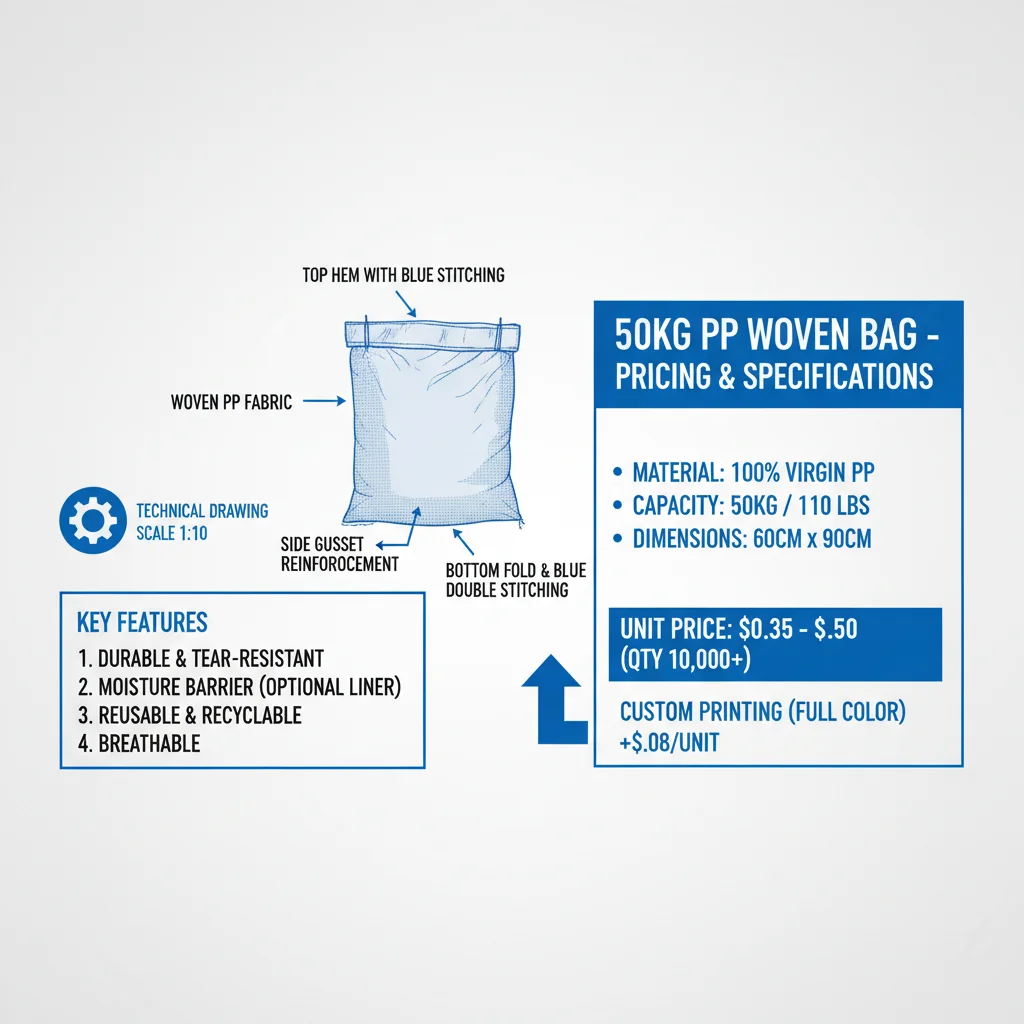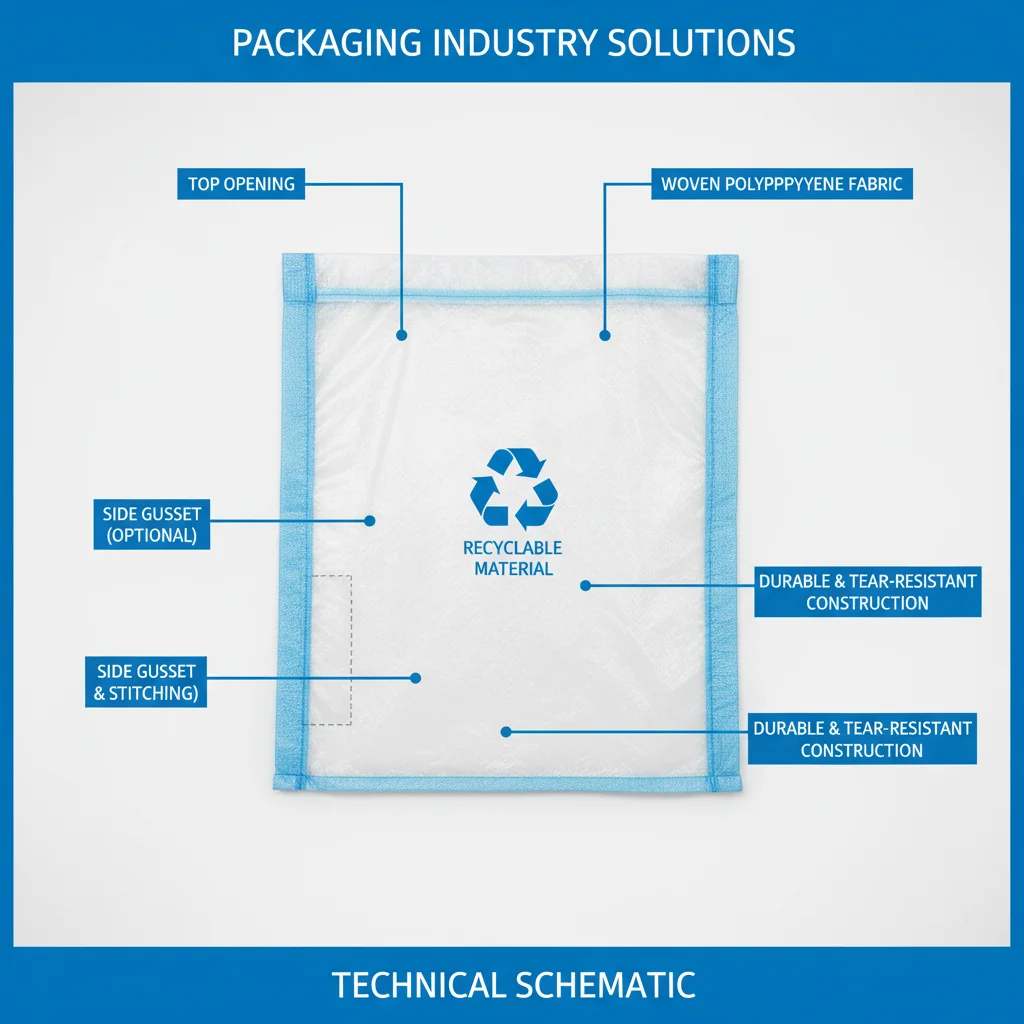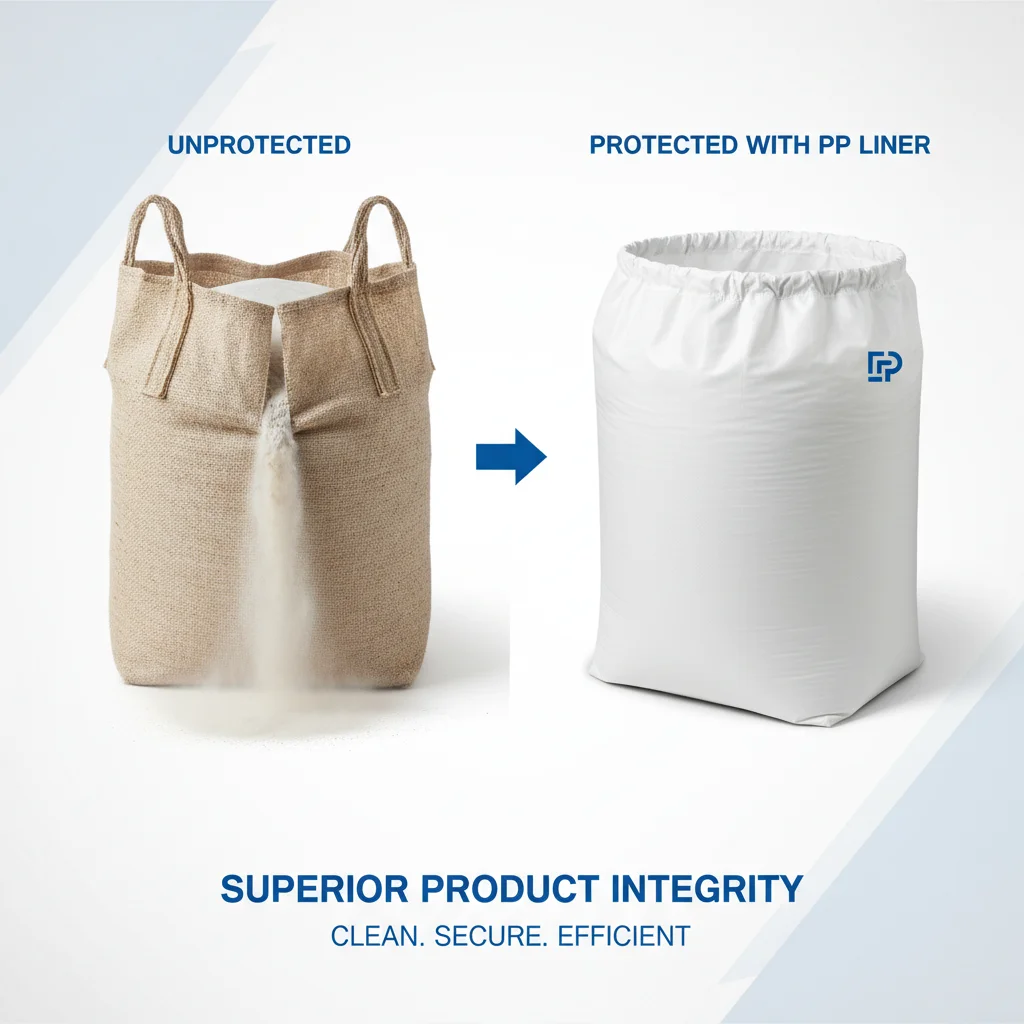
Selecting the right industrial packaging often involves a critical trade-off between structural durability and brand visibility. For companies transporting bulk granulated materials, custom printed woven polypropylene bags provide a dual-purpose solution that ensures product integrity while serving as a high-impact marketing tool in the supply chain.
Beyond simple containment, the integration of high-resolution printing on woven PP fabrics allows industrial manufacturers to communicate safety warnings, branding, and batch specifications directly on the primary packaging. This eliminates the need for secondary labeling and reduces the risk of operational errors during logistics.
Whether utilizing BOPP lamination for photographic quality or flexographic printing for cost-efficient bulk marking, the choice of printing technology must align with the bag's intended environment and the physical stress the packaging will endure.

The Role of Branding in Industrial PP Woven Packaging

In the B2B industrial sector, packaging is often viewed as a purely functional requirement. However, custom printed woven polypropylene bags transform a utility item into a strategic asset. By incorporating precise branding, companies can distinguish their products in crowded warehouses and ensure that end-users can immediately identify the grade and origin of the material.
The psychological impact of professional packaging cannot be understated. When a customer receives a shipment of chemical resins or agricultural powders in a high-quality, custom-printed bag, it signals a commitment to quality control and operational excellence that extends to the product inside.
Moreover, printing is essential for compliance. From hazardous material warnings to weight certifications and barcodes, the ability to print complex data directly onto the PP woven fabric ensures that safety and regulatory information remains legible throughout the transit process.
Technical Printing Methods for High-Durability Fabrics
Not all printing processes are suited for the textured surface of woven polypropylene. The primary challenge lies in the non-porous nature of the PP resin and the inherent "grid" pattern of the woven fabric, which can cause ink bleed or uneven coverage if not handled correctly.
Flexographic printing remains the industry standard for high-volume, low-complexity designs. It uses flexible relief plates to apply ink directly to the fabric, offering high speed and low cost, though it is limited in terms of photographic detail and color gradient.
For brands requiring premium aesthetics, BOPP (Biaxially Oriented Polypropylene) lamination is the superior choice. In this process, the graphics are printed on a clear film which is then heat-laminated to the woven fabric. This not only provides a high-gloss, photographic finish but also adds an extra layer of moisture protection and tear resistance.
Application Scenarios Across Chemical and Agricultural Sectors
The utility of custom printed woven PP bags varies significantly depending on the industry's specific environment. In the chemical sector, for instance, the focus is often on the legibility of safety symbols and technical specifications. Printed valve bags are frequently used for resins and powders where automated filling is required, combining high-speed productivity with clear product identification.
In the agricultural sector, the packaging must withstand exposure to humidity and rough handling. Custom printed bags for grains or seeds often emphasize brand recognition to compete in retail environments, utilizing BOPP lamination to prevent moisture ingress while maintaining vibrant colors that attract buyers on the shelf.
Building materials, such as cement or specialized mortars, rely on high-tenacity PP woven fabric. Here, printing is used to denote different strength grades or additive types, ensuring that construction crews use the correct material for specific structural requirements, thereby reducing on-site waste and errors.
Evaluating the Impact of BOPP Lamination on Performance
When comparing standard woven bags to those with BOPP lamination, the differences extend beyond aesthetics. Lamination fundamentally changes the surface tension and permeability of the bag, which has a direct effect on how the product is stored and transported.
The following data represents a relative comparison of performance metrics between standard flexo-printed bags and BOPP laminated custom printed woven polypropylene bags across key industrial criteria.
custom printed woven polypropylene bags Performance Metrics
As indicated, BOPP lamination significantly boosts the "Brand Perception" and "Moisture Barrier" scores. While the material cost is higher, the reduction in product spoilage and the increase in market value typically justify the investment for premium industrial products.
Procurement Factors for Custom Printed Industrial Bags
Procuring custom packaging requires a balance between technical specifications and budgetary constraints. The first consideration is the fabric grade; virgin PP is essential for food-grade or high-purity chemical applications, whereas recycled PP may suffice for lower-sensitivity industrial waste.
Secondly, the filling method must be matched to the bag design. For automated lines, block bottom valve bags are preferred due to their stability and precision filling. If the product is manually bagged, open-mouth PP woven bags with a drawstring or heat-seal closure may be more appropriate.
Finally, the printing lead time must be integrated into the production schedule. Since custom plates are required for flexographic and BOPP printing, procurement managers should maintain a buffer of stock or utilize a strategic partner like Hebei Shengshi Jintang Packaging to ensure a consistent supply chain.
Future Directions in Sustainable Polypropylene Printing
The industrial packaging landscape is shifting toward a circular economy. Future developments in custom printed woven polypropylene bags are likely to focus on the use of bio-based resins and recyclable ink systems that do not contaminate the PP recycling stream.
We may see an increase in the adoption of digital printing for small-batch custom orders. Unlike traditional plate-based printing, digital systems could allow companies to change branding or product details in real-time without the cost and waste associated with new plates.
Furthermore, the integration of "smart packaging" is expected to grow. Printing QR codes or NFC tags directly into the BOPP layer could enable real-time tracking and authenticity verification, providing a digital bridge between the physical bag and the corporate logistics system.
Comparing Printing Technologies for Different Load Capacities
Choosing between printing options often depends on the weight of the material being packed and the expected handling conditions. For bags carrying 10kg to 50kg, the physical stress on the print surface is higher, necessitating a more robust ink-to-fabric bond.
The following table outlines the strategic selection of printing and bag types based on specific industrial requirements.
| Packaging Goal | Recommended Printing | Bag Architecture | Primary Trade-off |
|---|---|---|---|
| High-End Retail | BOPP Lamination | BOPP Laminated Bag | Higher Cost / Premium Look |
| Automated Chemical Fill | Flexographic | Block Bottom Valve Bag | Speed / Limited Detail |
| Bulk Commodity Grain | Flexographic | Standard PP Woven Bag | Low Cost / Basic Branding |
| Hazardous Material | Multi-Color Flexo | PE Coated Woven Bag | Compliance / Material Weight |
| Specialized Minerals | BOPP Lamination | Pinch Bottom Bag | Durability / Production Time |
| Heavy Industrial Parts | Screen/Flexo Print | FIBC / Big Bag | High Strength / Coarse Print |
Ultimately, the decision should be driven by the end-user's environment. For products destined for outdoor storage, UV-stabilized PP combined with BOPP lamination is the only way to ensure that custom printing does not fade under solar exposure.
Frequently Asked Questions
Conclusion
Custom printed woven polypropylene bags are far more than just a container; they are a critical intersection of logistics, safety, and marketing. By selecting the appropriate printing technology—whether it be the efficiency of flexography or the premium quality of BOPP lamination—industrial manufacturers can significantly enhance their brand presence and operational efficiency.
For companies seeking to optimize their industrial packaging, evaluating the trade-offs between material cost, print durability, and filling compatibility is essential. Readers evaluating these solutions can review relevant product and company information available through www.ssjtpack.com.