Choosing the right closure system for industrial bulk packaging often comes down to a trade-off between sealing security and filling speed. For many high-volume producers of powders and granules, the traditional sewn bottom is being replaced by a more sophisticated architecture designed to prevent leakage and enhance stability.
The shift toward custom pinch bottom bags represents a strategic move toward automation-friendly packaging. By utilizing a specialized folding and sealing technique at the base, these containers eliminate the "needle holes" common in stitched bags, providing a more hermetic seal that is critical for moisture-sensitive materials.
Understanding the technical nuances of this packaging style is essential for procurement managers looking to reduce product loss and improve shelf presence. This article examines the structural logic, material requirements, and operational advantages of adopting pinch-bottom designs in modern supply chains.


Unlike standard flat-bottom bags, the pinch-bottom architecture relies on an overlapping fold at the base. This fold is then sealed—typically via heat sealing or specialized adhesives—to create a secure, leak-resistant closure. The primary goal is to eliminate the possibility of fine powders escaping through the seams during the stress of vibration and stacking.
This design allows the bag to stand upright more effectively once filled, which is a significant advantage for retail distribution and warehouse palletization. By concentrating the seal at the very bottom, the structural integrity of the bag walls remains intact, reducing the risk of side-bursts under heavy loads.
The effectiveness of a pinch-bottom bag is heavily dependent on the substrate used. Most industrial-grade options utilize a PP woven fabric core for tensile strength, which prevents punctures during rigorous shipping. For higher-tier protection, this core is often integrated with a BOPP (Biaxially Oriented Polypropylene) lamination. This adds a moisture-proof barrier and allows for high-resolution gravure printing, turning a utility container into a branded marketing asset.
Key technical parameters include the mesh count of the woven fabric and the GSM (grams per square meter) of the lamination. For bags ranging from 5kg to 50kg, the balance between fabric density and lamination thickness is critical to ensure that the pinch seal does not fail under the hydrostatic pressure of the contained material.
Additionally, options for UV stabilization are often integrated into the raw PP resin. This is essential for products like fertilizers or construction chemicals that may be stored in outdoor environments, as it prevents the polymer chains from degrading and becoming brittle under sunlight exposure.
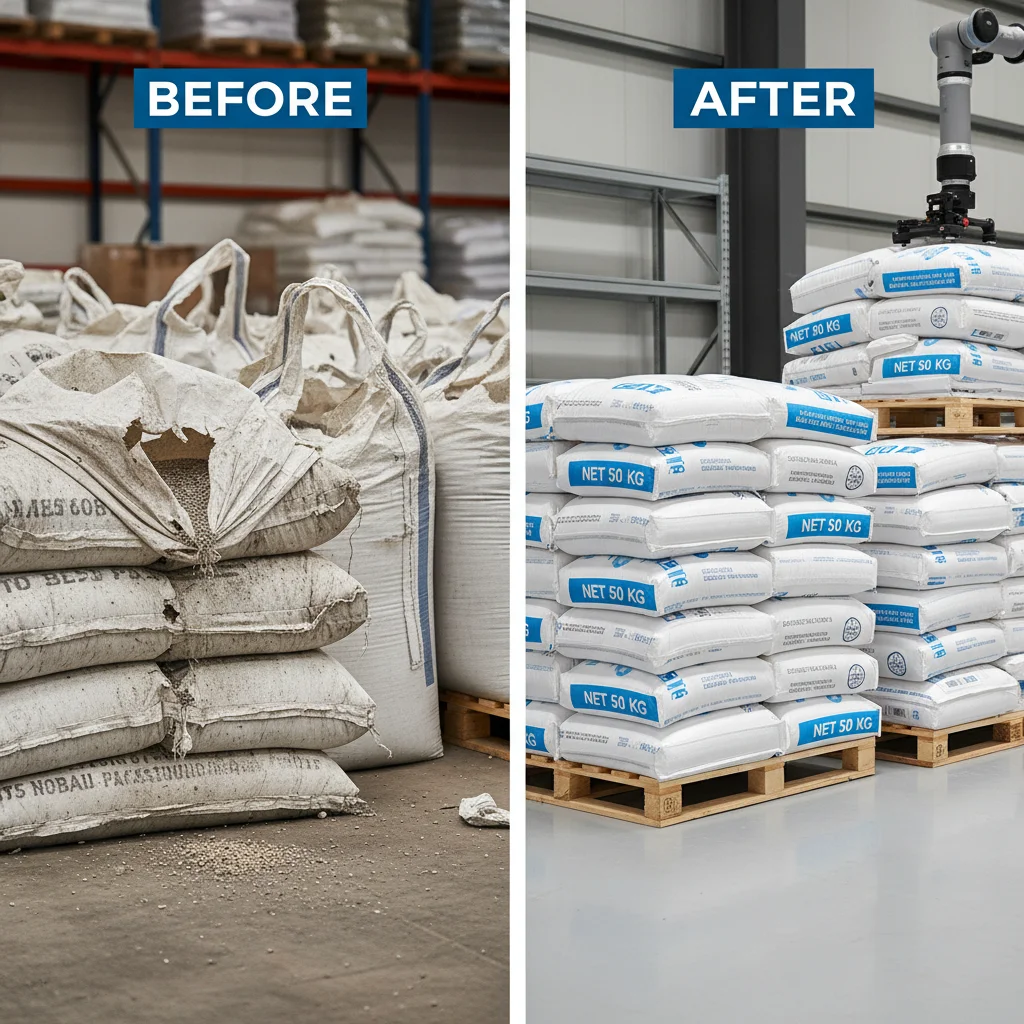
When comparing traditional stitching to pinch-bottom sealing, the primary metric is the "Leakage Rate." Sewn bags, while fast to produce, create thousands of micro-perforations. In contrast, the pinch-bottom method creates a continuous seal that acts as a genuine barrier against external contaminants and internal product loss.
The transition from stitched to pinch-bottom closures reduces powder loss by approximately 95% in automated filling lines, significantly lowering warehouse cleaning costs and product waste.
Furthermore, the aesthetic impact is substantial. Stitched bottoms often look industrial and raw, whereas the clean finish of a pinch-bottom bag conveys a professional, retail-ready image. This is particularly important for companies moving from B2B bulk shipments to direct-to-consumer retail packaging.
Evaluating packaging performance requires looking at several relative indices: moisture resistance, burst strength, branding potential, and seal integrity. Pinch-bottom bags consistently outperform standard woven options in these categories, especially when combined with BOPP lamination.
The following index illustrates the relative value gain when upgrading from a standard PP woven bag to a custom pinch-bottom laminated solution.
In a typical industrial setting, such as a chemical plant producing fine powders, the risk of "dusting" during transport is a major safety and financial concern. Using custom pinch bottom bags ensures that these fine particulates remain contained, reducing the risk of contamination in warehouses and ensuring the end customer receives the full weight of the product.
Similarly, for the agricultural sector, seeds and specialty feeds require a barrier against humidity to prevent spoilage. The combination of the pinch-bottom seal and a BOPP laminated layer creates a semi-hermetic environment that extends the product's shelf life compared to basic woven bags.
The trajectory of the packaging industry is moving toward "intelligent containment," where the bag is no longer just a carrier but a tool for brand differentiation and waste reduction. We are seeing a transition where the structural integrity of the bag is being paired with advanced materials that are easier to recycle without sacrificing strength.
The integration of automated filling lines has also driven the demand for precision-manufactured bags. If a bag's dimensions vary by even a few millimeters, the automated pinch-seal machine may fail, leading to costly downtime. This is why precision weaving and lamination have become the industry standard.
Looking forward, the focus is shifting toward eco-compliance. Since both BOPP and PP are polyolefins, they are compatible for recycling, provided that the industry continues to move toward mono-material constructions that simplify the recovery process.
Choosing between different bag styles requires a balanced analysis of the product's physical properties and the intended distribution channel. A buyer must consider the flowability of the powder, the required weight capacity, and the environmental stressors the bag will face.
For those prioritizing brand visibility and moisture protection, a BOPP laminated pinch-bottom bag is usually the optimal choice. However, for low-cost, short-term industrial transport where aesthetics are irrelevant, a standard PP woven bag may suffice.
To assist in this decision, the following matrix compares the relative suitability of common packaging formats based on key operational requirements.
| Requirement | Standard PP Woven | BOPP Laminated Bag | Pinch Bottom Bag |
|---|---|---|---|
| Leak Prevention | Low | Moderate | High |
| Moisture Barrier | Low | High | High |
| Brand Graphics | Basic | Excellent | Excellent |
| Automation Fit | Moderate | Moderate | High |
| Outdoor Storage | Low (unless UV) | Moderate | High (with UV) |
| Retail Appeal | Industrial | Premium | Premium |
The pinch bottom method involves folding the bottom of the bag in a specific overlapping pattern, which is then sealed using heat or strong adhesives. Unlike sewing, which creates holes in the fabric, this method produces a continuous, airtight, or water-resistant seal. This makes the bags ideal for fine powders that would otherwise leak through stitch holes, while also allowing the bag to stand upright more stably during retail display.
BOPP (Biaxially Oriented Polypropylene) film is laminated onto the woven PP fabric to provide two primary benefits: protection and presentation. Technically, it creates a superior barrier against moisture, dust, and oxygen, which prevents product spoilage. Visually, it allows for high-definition, photographic gravure printing. This combination ensures that the bag is not only structurally sound for heavy-duty transport but also acts as a high-impact marketing tool on the shelf.
Industries handling fine, high-value powders or moisture-sensitive granules benefit most. This includes chemical manufacturers (fertilizers, resins), the agricultural sector (specialty seeds, animal feed), and construction material suppliers (specialty cements, mortars). These sectors require the synergy of high tensile strength to prevent bursts and a leak-proof seal to avoid material loss and maintain workplace cleanliness during transport.
Yes, pinch bottom bags are specifically designed for high-speed automated lines. Because the closure is standardized and the bag dimensions can be manufactured to extremely tight tolerances, they integrate seamlessly with automated filling and sealing equipment. This reduces the manual labor required for closing bags and significantly increases the throughput of the packing process compared to traditional manual sewing methods.
Valve bags are excellent for high-speed filling and self-closing capabilities, but pinch bottom bags often offer better retail presentation and superior stability when standing upright. While valve bags are more common in purely industrial bulk settings, pinch bottom bags are the preferred choice when a product needs to bridge the gap between an industrial shipment and a retail-ready consumer package, offering a better balance of aesthetics and containment.
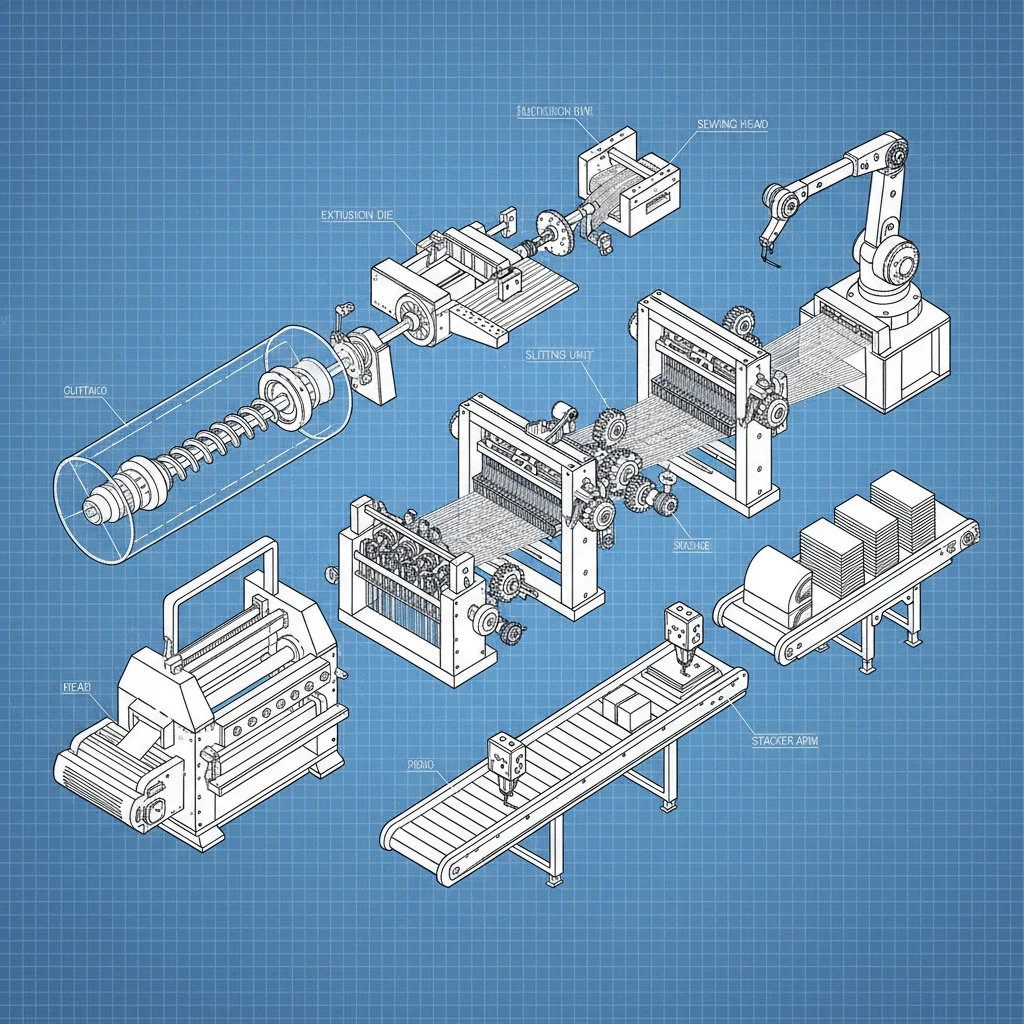
Yes, UV stabilization is a critical option for bags that will be exposed to sunlight. UV-stabilizing additives are integrated directly into the PP woven fabric during the extrusion process. This prevents the polymer from undergoing photo-degradation, which otherwise causes the bag to become brittle and fail. This is highly recommended for agricultural products or construction materials stored outdoors in sunny climates.
The move toward custom pinch bottom bags is more than just a change in closure style; it is an investment in operational efficiency and brand equity. By eliminating the vulnerabilities of stitched bottoms and leveraging the protective power of BOPP lamination, manufacturers can significantly reduce product waste and enhance their market presence.
As automation becomes the standard in the manufacturing of chemicals, feeds, and construction materials, selecting a packaging partner that understands the intersection of material science and precision engineering is key. Hebei Shengshi Jintang Packaging provides the technical expertise to ensure your packaging is as durable as it is visually compelling.

Hit enter to search or ESC to close