When evaluating pp woven sacks price, industrial procurement managers must look beyond the initial quote per unit to understand the complex interplay of raw material grades, weaving density, and protective coatings. In the competitive landscape of polypropylene packaging, the cost of a sack is a direct reflection of its intended load capacity and the environment in which it will be deployed, from chemical warehouses to open-air agricultural sites.
The primary challenge for buyers is avoiding the "low-cost trap," where a marginally lower purchase price leads to higher operational costs through bag failures, product leakage, or premature degradation due to inadequate UV stabilization. Understanding the cost drivers allows companies to optimize their packaging spend without compromising the structural integrity of their supply chain.
This analysis provides a comprehensive framework for decoding the pricing structure of PP woven sacks, detailing the technical parameters that influence cost, the ROI of premium materials, and a practical decision matrix for selecting the most cost-effective packaging solution for specific industrial applications.

Core Drivers of PP Woven Sacks Pricing

The price of PP woven sacks is fundamentally dictated by the volume of polypropylene resin used and the complexity of the weaving process. Fabric weight, measured in grams per square meter (GSM), is the most immediate price lever; a higher GSM increases the tensile strength and tear resistance but adds to the material cost. For industrial applications, the balance between GSM and load capacity is critical to maintaining a lean budget.
Beyond raw material, the weaving style—whether circular or flat—and the precision of the weave density impact the final price. High-precision weaving reduces material waste during the conversion process, which can lead to more competitive pricing for large-scale orders while ensuring that the sacks maintain consistent dimensions and stability under heavy loads.
Material Grade and its Economic Impact
The use of 100% virgin polypropylene polymers versus recycled resins creates a significant price divergence. While recycled materials may lower the initial pp woven sacks price, virgin PP ensures chemical purity and consistent physical properties, which are non-negotiable for the chemical and food-grade sectors. Virgin resins provide a higher breaking strength in both warp and weft directions, reducing the risk of catastrophic bag failure.
From a long-term investment perspective, premium materials extend the operational lifespan of the packaging. For instance, using high-grade virgin PP can extend the material life from a standard 12-18 months to 24-36 months, effectively lowering the replacement cost and the total cost of ownership (TCO) despite the higher upfront price per unit.
The Cost of Specialized Finishing and Coatings
Additional finishing options introduce varying cost layers depending on the required barrier properties. Uncoated fabrics remain the most economical choice and are ideal for breathable applications like grain storage. However, when moisture-proofing or airtightness is required, PE coating or BOPP lamination is applied. These processes increase the price but provide essential protection against humidity and fine powder leakage.
UV stabilization is another critical cost factor. Integrating UV inhibitors directly into the resin during the extrusion process prevents the fabric from becoming brittle under sunlight. For outdoor storage in construction or agriculture, the added cost of UV protection is an insurance policy against sunlight-induced degradation, which would otherwise necessitate more frequent bag replacements.
Relative Cost-Benefit Analysis of Bag Specifications
To understand the value proposition of different specifications, we can examine a relative performance index. This conceptual framework compares standard industry bags against high-performance specifications across five key operational metrics. The goal is to illustrate where an increase in pp woven sacks price translates into tangible operational gain.
As shown in the illustrative index, while the premium specification carries a higher price point, it delivers a disproportionate increase in load capacity and UV resistance. The most significant gain is seen in the reduction of waste rates, where high-precision fabric significantly outperforms standard alternatives, directly impacting the bottom line through higher material yield.
Hidden Costs of Low-Specification Packaging
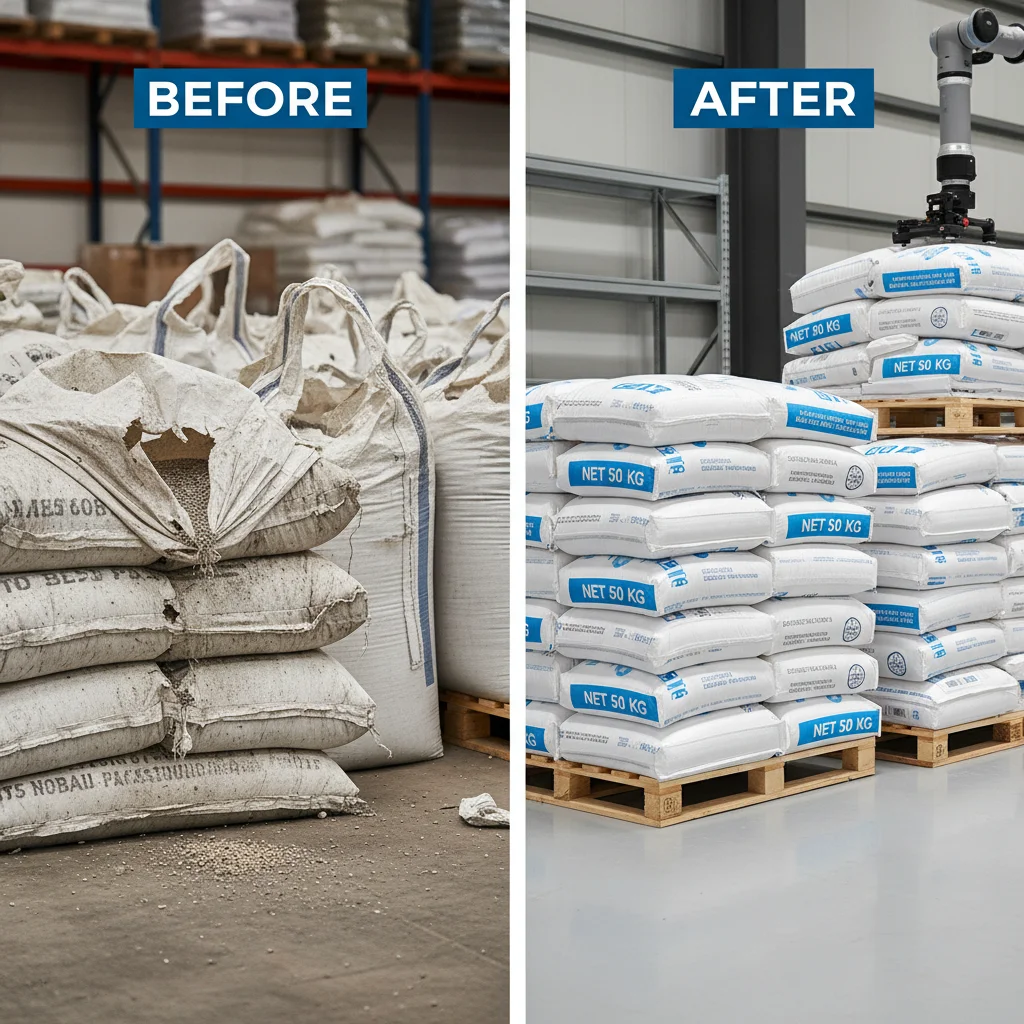
Procuring sacks based solely on the lowest quote often introduces hidden operational expenses. One of the primary risks is the increased waste rate; low-grade fabrics often suffer from inconsistent GSM and weave density, leading to a failure rate of 5% to 8% during the filling and transport process. High-grade fabrics typically reduce this failure rate to under 2%.
Furthermore, the labor cost associated with cleaning up leaked materials and the potential for product loss can quickly eclipse any initial savings. In the chemical industry, a single bag rupture can lead to significant downtime and safety hazards, making the "cheapest" bag the most expensive option in terms of risk management and operational continuity.
Procurement Risks and Supplier Evaluation
Evaluating a supplier requires looking at their technical capability rather than just their price list. A reliable partner in the PP woven bag industry should provide detailed parameters, including precise GSM, tensile strength (warp/weft), and UV rating certifications. The ability to offer customized widths (from 1.0m to 6.0m) and weights (50 gsm to 150 gsm) indicates a level of manufacturing flexibility that reduces waste for the end buyer.
Buyers should also assess the supplier's quality assurance protocols. Batch testing for tensile strength and GSM consistency is a hallmark of a professional operation. When a supplier can demonstrate strict compliance with international shipping and safety standards, the perceived risk of procurement decreases, justifying a fair market price over an suspiciously low one.
Strategic Selection Matrix for Industrial Buyers
Choosing the right packaging involves matching the technical specifications to the application's risk profile. The following matrix provides a qualitative comparison of different PP woven solution categories to help buyers determine which specification aligns with their specific needs and budget constraints.
| Solution Type | Primary Driver | Best Application | Main Consideration |
|---|---|---|---|
| Uncoated Virgin PP | Breathability | Grains & Seeds | Moisture Sensitivity |
| PE Coated Fabric | Water Resistance | Fine Powders | Air Permeability |
| BOPP Laminated | Branding/Barrier | Retail Chemicals | Higher Unit Cost |
| UV-Stabilized Heavy | Durability | Construction Sand | Outdoor Exposure |
| Circular Woven FIBC | Bulk Capacity | Mining/Minerals | Lifting Hardware |
| Custom GSM Fabric | Weight Optimization | Specialized Feed | MOQ Requirements |
By utilizing this matrix, procurement teams can move away from price-only negotiations and instead focus on "value-per-load." This ensures that the packaging not only protects the product but also optimizes the total logistics cost from the factory to the end user.
Frequently Asked Questions
Prices are mainly driven by the global cost of polypropylene resin, the weight of the fabric (GSM), and the addition of specialized treatments like UV stabilization or BOPP lamination. Order volume also significantly affects the price per unit due to setup costs in the weaving process.
Uncoated fabric is cheaper and better for breathable products. However, coated fabric is more cost-effective for moisture-sensitive or fine-powder products because it prevents product loss and spoilage, reducing the overall waste cost.
While UV inhibitors increase the initial price, they prevent the polymer chains from breaking down under sunlight. This extends the usable life of the bags during outdoor storage, reducing the frequency of replacements and lowering the annual packaging budget.
Virgin PP has a higher initial cost but offers superior tensile strength and purity. The ROI is realized through a lower bag failure rate (under 2% vs 5-8% for standard/recycled) and longer material life, leading to lower total replacement costs.
Yes, by precisely matching the GSM to the required load capacity, you avoid paying for excess material. However, reducing GSM too far can increase the risk of tears, so it must be balanced with tensile strength testing.
To get an accurate quote, specify the material grade (virgin vs recycled), fabric weight (GSM), dimensions (width and length), coating requirements (PE or BOPP), and whether UV protection is needed for outdoor use.
Conclusion
Determining the ideal pp woven sacks price requires a shift in perspective from "lowest unit cost" to "lowest total cost of ownership." By analyzing the impact of material purity, weaving precision, and specialized coatings, industrial buyers can specify packaging that minimizes waste and maximizes product protection. Investing in high-grade virgin PP and proper UV stabilization typically yields a higher ROI through extended material life and significantly reduced failure rates in demanding environments.
For organizations seeking to optimize their industrial packaging strategy, detailed specifications and supplier technical capabilities are the most reliable indicators of value. Procurement teams can explore high-performance PP woven fabric and bag solutions at www.ssjtpack.com to align their packaging requirements with operational efficiency.